
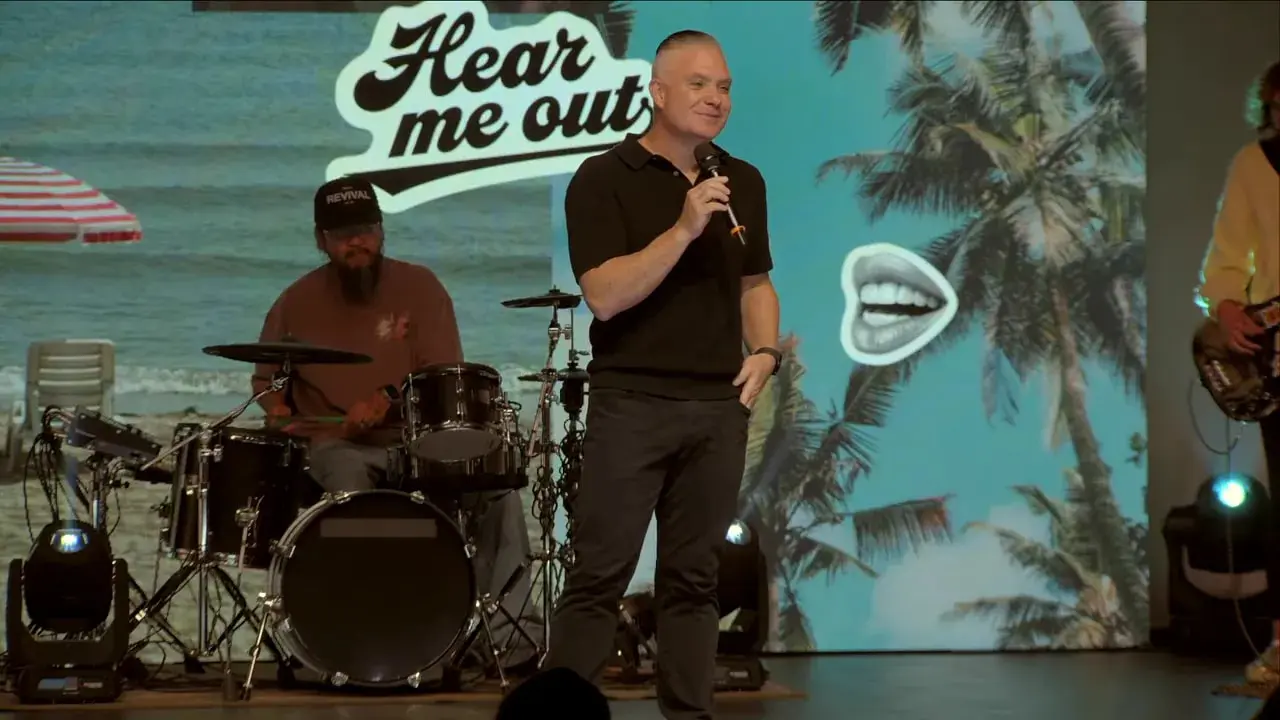
Hear Me Out | Week 4 | Pastor Ben Pierce
We live in a world full of busy schedules, short attention spans, and endless to-do lists. Yet right inside that everyday noise are moments God uses to change lives. The story of the woman at the well in John 4 is not just ancient history. It’s a template for how ordinary conversations become eternal conversions. When we slow down, listen carefully, and follow a simple pattern Jesus modeled, everyday conversations become opportunities for revival.
Why the Well Matters: Ordinary Moments, Extraordinary Outcomes
Jesus didn’t wait for a platform, a stage, or a marketing plan. He sat by a well at noon and simply asked for a drink. That single, relational exchange exposed a need, peeled back a barrier, and led a woman from curiosity to confession to calling others to meet the Messiah. From one conversation, an entire city moved toward God.
The pattern is clear and practical: the Holy Spirit uses our presence, not perfection, to open hearts. You don’t need theological degrees, a sermon outline, or a polished presentation. What you need is to be available, loving, and clear. When we make space for God’s timing, ordinary encounters at the grocery line, in a barber chair, or at the checkout at Home Depot turn into divine appointments.

Three Lessons Jesus Teaches Us at the Well
If you want a quick framework to remember, here are three things Jesus modeled that we can copy.
1. Conversations open doors and opportunities
People don’t randomly unload their deepest longings to strangers. When someone begins to share pain, doubt, or longing, they are often responding to the Spirit nudging them toward healing. Those offhand comments, “I just put my mom in hospice” or “I lost my job,” are invitations, not inconveniences.
Jesus began with a simple question: “Will you give me a drink?” That’s the kind of ordinary opening line we all can use. The aim is to notice when the door opens and step through it.
Practical takeaway: start by listening. When someone shares something personal, resist the urge to hurry away. Ask one more question. Stay one more minute. Your presence can be the key that opens a heart.
2. Move small talk into soul talk
Small talk is not the destination; it’s the bridge. Most conversations begin with harmless, surface-level exchanges. The trick is knowing when to cross the bridge into soul talk: the kind of honest conversation that deals with real need and points directly to Jesus.
Jesus didn’t lecture or shame the woman. He asked the next logical question and gently exposed the deeper issue, the things separating her from God. He offered hope, not humiliation. That’s the posture we should adopt: curious, compassionate, and calm.
Example questions to move from small talk to soul talk:
- How are you really doing?
- Is there anything I can pray about for you right now?
- That sounds heavy. Have you ever thought about where you’d turn for hope?
Those are simple, natural, and powerful. They create a safe space for someone to be honest and to encounter the living water Jesus offers.
3. Conversations bring clarity that cultivates conversion
After listening and transitioning into soul talk, the next step is clarity. People often leave spiritual conversations more confused than before because the person speaking to them never made the essentials clear. Clarity is loving.
Jesus cut through the debate over worship locations and told the woman plainly: “You need the Messiah, and I am he.” That clear invitation brought instant transformation. We can do the same when we move from caring to clear gospel witness.
A clear gospel conversation doesn’t require a full theology lecture. It requires:
- Honesty about our own needs and how God met them.
- Simplicity in explaining what Jesus offers: forgiveness, new life, eternal hope.
- An invitation to pray, to meet, to take the next step, like Alpha or a church gathering.
Simple Words That Matter: Phrases You Can Use
Fear and awkwardness often come from not knowing what to say. Here are short, precise phrases you can use right now:
- “Can I pray for you right now?” immediate, actionable, and pastoral.
- “If you breathed your last breath today, do you know where you’d spend eternity?” is direct, clarifying, and gospel-centered.
- “Would you like to hear what God did in my life?” invites testimony and modeling.
- “I’d love to introduce you to Jesus. Can I walk with you through that?” combines clarity with invitation.
Keep it short. Keep it loving. The Spirit will bring the rest. We have power, love, and self-discipline inside us, not to intimidate people, but to lovingly point them to Christ.
Recognize Chyros Moments: Make the Best Use of God-ordained Moments
The New Testament uses two words for time: chronos and chyros. Chronos is clock time. Chyros are God-ordained moments, windows when God aligns hearts and circumstances. Those are the moments to step away from your busy schedule and engage.
You might meet these moments at the grocery store, in the barber chair, at Home Depot, or in the parking lot before a soccer practice. They often feel inconvenient. They are worth the inconvenience.
Here’s a habit to develop:
- Pray daily for open doors. Ask God: Would you give me an achy moment today?
- Slow down at least once a day. Turn off autopilot and intentionally make space for one extra question.
- Be ready to pray in the moment. Don’t let fear say, “I’ll pray later.” Pray now.
Real Examples That Show How It Works
The approach is not theoretical; it’s lived out in grocery aisles and service counters. Two short stories help make this practical.
Home Depot friend
A regular interaction with a store associate named “Calvin” turned into a clear doorway. After months of friendly conversation, Calvin said, “If I ever converted from Judaism, it would be to come to your church.” That opening invited prayer, intentional conversation, and further relationship. He recognized God’s presence and allowed the speaker to move toward clarity.
The barber chair
In a barber shop, simple small talk about family turned into soul talk when the barber shared a painful story of losing a child. The next question, “Have you thought about seeing her again someday?” opened a doorway to speak into hope and eternity. It didn’t become a full conversion that day, but it became a relationship and an ongoing opportunity.
These examples show how ordinary proximity plus gentle curiosity can unlock deep need. Keep showing up. Keep asking. Keep praying.
Tools and Next Steps: Make It Easier to Share
There are simple resources that help bring clarity and structure when you do have a soul conversation:
- Romans Road: a clear set of scriptures that explain sin, penalty, and the gift of salvation. Keep it handy on your phone or in your Bible.
- Alpha: a conversation-based series that invites people to ask big questions in a safe environment. It’s a tremendous first step to invite someone to if they’re curious but not ready to decide on the spot.
- Tap In / Inspiring a Generation: tools to share stories and connect people to the church community so that no decision goes unnoticed or unsupported.
Practical tip: when you sense someone is seeking, offer one clear next step. “Would you like to come to Alpha with me?” is often far more effective than “I’ll be praying for you.” Give people a path.
How to Lead Someone to Faith in a Few Simple Steps
You don’t need a script, but here is a proven rhythm to guide a conversation toward conversion:
- Notice: Pay attention to stress cues, confession, or longing.
- Listen: Ask one or two follow-up questions that invite honesty.
- Care: Respond with empathy, not judgment.
- Share: Briefly tell what Jesus has done for you; offer clarity about forgiveness and new life.
- Invite: Pray with them, invite to Alpha or church, or simply ask: “Would you like to invite Jesus in with me right now?”
Keep the language simple and the heart compassionate. If you need a one-sentence script: “I was hurting like that once. Jesus helped me. Would you like to meet him?” That’s clarity, vulnerability, and invitation wrapped in one.
When Someone Says Yes: Celebrate and Connect
When a person decides to trust Jesus, they recognize the significance immediately. Celebrate with them, pray together, and connect them to the community. That follow-up is how one conversation turns into a lasting transformation for a person and their family.
Don’t leave them adrift. Offer to connect them with someone who will continue to walk with them, answer questions, and help them take the next steps, such as baptism or joining a discipleship group.
Common Fears and Simple Responses
Fear of awkwardness, rejection, or saying the wrong thing keeps many from engaging. But remember:
- God uses ordinary people. You do not need to be a perfect speaker, only a faithful presence.
- The Holy Spirit guides words. Ask God for the following sentence and trust him to lead the conversation.
- Clarity is kind. A clear gospel invitation honors the person by removing confusion.
If you feel intimidated, rehearse two things: a short testimony about how God changed you, and a brief invitation to pray or to attend Alpha. That’s enough.
Stories That Encourage: Alpha Testimonies
Conversation-based programs like Alpha create safe spaces to ask the hard questions. People who came skeptical, drawn by a free meal or childcare, found themselves asking deep questions, experiencing vulnerability, and noticing a shift in their hearts. Vulnerability in a group setting often unlocks personal transformation.
If you have someone on your heart, invite them to Alpha. It’s a relational, conversational next step that respects where people are and helps them encounter the gospel with clarity.
One Final Encouragement and a Simple Prayer
We are ambassadors called to make an appeal for reconciliation. That calling is lived out not only in programs, but also in everyday encounters. If you pause your schedule a little more often, ask one extra question, and offer a simple, clear invitation, God will meet you in those moments.
Here is a short prayer you can use if you want to invite Jesus into your life or help someone else do the same:
Father God, I don’t fully understand everything about you yet, but I want to know you. I open my heart and ask you to come in. Forgive me of my sin and make me new. I believe Jesus died and rose so I can have new life. I surrender my life to you. Amen.Suppose someone prays that with you, celebrate. Follow up. Connect them to the community. Share their story. These are the next steps that keep conversions living and growing.
Practical Next Steps to Practice This Week
- Pray for open doors. Each morning, ask God to give you one chyros moment today.
- Carry the Romans Road. Save it on your phone or in your Bible for quick clarity.
- Invite someone to Alpha. Think about one person and send an invite.
- Share a short testimony. Practice a 60-second story of what Jesus has done in your life.
- Tap in and tell the story. When someone takes a step, celebrate it publicly to encourage others.
When we cultivate presence over perfection, God uses the simplest conversations to produce the most extraordinary outcomes. Let’s be available, compassionate, and clear, and watch God change lives through the moments he gives us.