
NEXT | Week 2 | Pastor Ben Pierce
There is a single principle that runs like a spine through Scripture and through every story of meaningful success: sacrifice. From the cross to the small, daily choices that shape our character, the path to any harvest requires something to be planted and allowed to die. That idea is simple to understand and hard to live with. It is also the most apparent reason why what we call paradise, actual spiritual fruit, restored relationships, deep healing, and the inheritance God promises, does not arrive without a cost.
The Big Idea: There is No Paradise Without Sacrifice
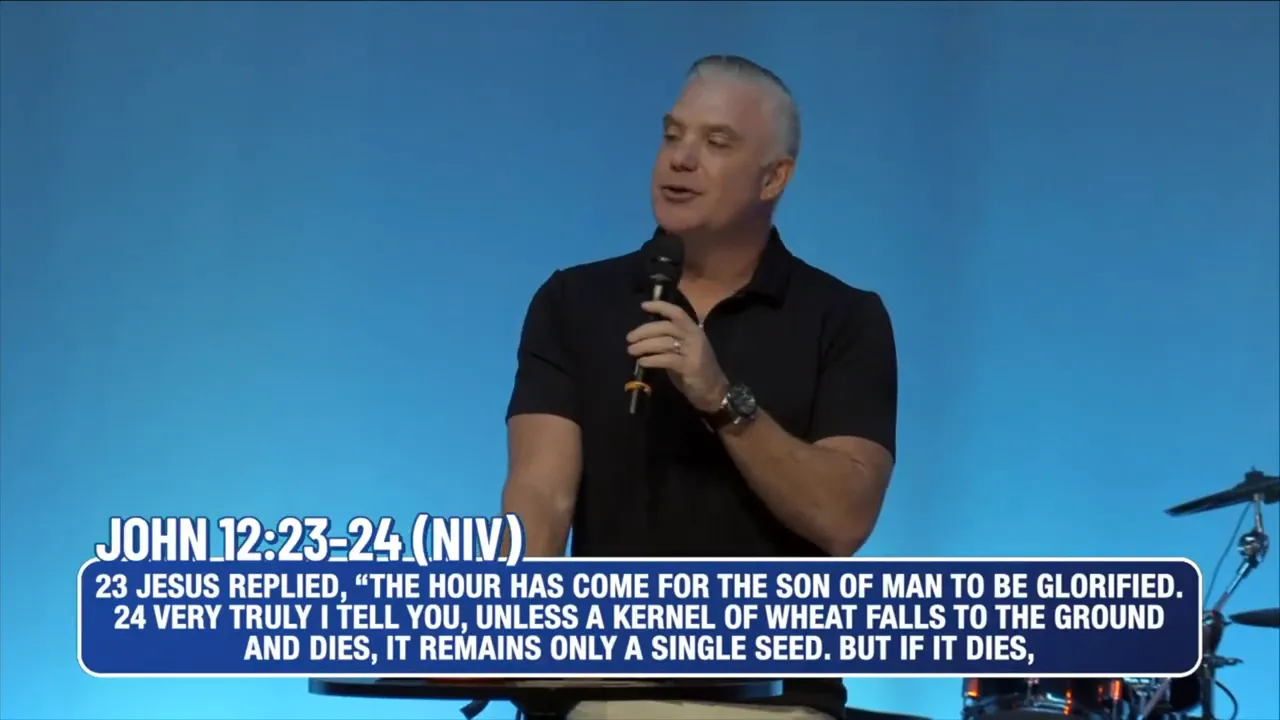
The core truth here is straightforward: the desired result of paradise has an essential component called sacrifice. Jesus’ death is the ultimate expression of that principle. His willingness to lay down glory for a human life and to bear the weight of humanity’s sin proved that a will of inheritance is only activated by death. Hebrews reminds us that a testament takes effect only when the one who made it has died. Spiritually, the inheritance of eternal life came through the seed of his life falling to the ground and dying.
“Unless a seed falls to the ground and dies, there can be no harvest.”
That biblical metaphor applies to everything that matters. Muscles, wisdom, relationships, and ministries all begin with a letting go. We don’t get strong without the pain; we don’t get wise without time given to study; we don’t experience intimacy with God without the discipline of prayer. A pivotal moment reshapes our desires, priorities, and capacity to receive what God wants to give.
What Sacrifice Really Means
Sacrifice is not merely a budget line or a nice sentiment. It has shape and function: it comes from surrender, it goes beyond surplus, it spills over, and the level of sacrifice determines the size of the harvest.
1. Sacrifice begins with surrender
A true sacrifice springs out of a heart that surrenders an agenda. The story of Elijah on Mount Carmel exposes a profound spiritual question: to whom will we surrender? People will sacrifice for what they worship. If our priorities are comfort, security, financial gain, or position, those things will become the masters we serve.
To sacrifice is to acknowledge stewardship rather than ownership. We steward what God entrusts to us. When God asks for a reallocation of those resources, time, money, and influence, he is asking for trust. Sacrifice is not meant to punish; it is our reasonable service in response to what Christ has done for us. In practical terms, surrender looks like a changed lifestyle. It makes us ask, “Will this cost enough to change me?” If it doesn’t, it probably isn’t true sacrifice.
2. True sacrifice goes beyond your surplus
Genuine sacrifice is not merely what you can write off on a spreadsheet without changing anything about how you live. When David purchased the threshing floor to offer a sacrifice, he insisted, “I will not offer burnt offerings to the Lord my God with that which costs me nothing.” That posture matters: God honors offerings that require a sacrifice.
In an affluent context, giving a portion of surplus income may be easy for some and nearly impossible for others. But the point is not to compete on a dollar amount. The fact is whether the gift alters your life. Do you feel it? Does it change the way you plan, talk, or steward other things? If so, God can likely use it as a sacrifice.
3. A real sacrifice spills over into other areas of life
In Elijah’s altar story, the prophets poured water over the sacrifice until the wood and the bull were soaked and a trench filled. That water was not just a dramatic flourish; it was the most precious resource they had during a three-and-a-half-year drought. The thing that cost them most spilled over the altar and into the trench. When God answered, the fire not only consumed the sacrifice; it licked up the water. The miracle was not only that lightning fell. The miracle was that people gave what mattered most to them.
A real sacrifice affects people beyond ourselves. The woman who anointed Jesus’ feet with costly perfume filled the whole room with the aroma of her devotion. Jesus’ sacrifice spills over to the entire world, past, present, and future. Likewise, our willingness to give away what matters will create a fragrance that others notice. Where there is service, there is sacrifice; where there is sacrifice, there is reward.
4. The scale of your success correlates with the depth of your sacrifice
The Scriptures contain repeated examples: Solomon’s enormous offerings were followed by wisdom to lead a nation; Cornelius’ generosity toward the poor became an offering that led to the salvation of his household; Isaiah promises that sharing food with the hungry will cause healing and light to break forth. Generosity and sacrifice are not a transactional coercion by God; instead, they are the means God uses to cultivate hearts that can receive a new kind of blessing.
Success in God’s economy is tied to cost. A small sacrifice may produce a small harvest. A life-changing sacrifice, one that alters your lifestyle, your calendar, or your deepest ambitions, can produce manifold blessings, not only financially but in areas money can’t buy: peace, restored relationships, clarity of purpose, and spiritual fruit that lasts into eternity.
Practical Steps to Discern Your Next Sacrificial Move
Knowing sacrifice is required is not the same as knowing where to begin. Here are practical steps to help you discern and act with courage.
- Pray and fast intentionally. Set aside time, seasons like 21 days or a focused fast, to seek clarity about what God is asking you to relinquish. Use those moments to listen more than speak.
- Inventory what you steward. Make a list: time, money, relationships, habits, influence. Which of these has God already used? Which are you clinging to?
- Ask specifically for direction. Pray: “What seed would you have me plant and let die to see a harvest?” Courage comes from clarity.
- Differentiate surplus from sacrifice. If a gift won’t be felt in your routines or patterns, consider whether God is asking for a more profound commitment.
- Create a plan and budget that is both spiritually sound and practical. Sacrifice without planning can produce chaos. Decide the sacrifice, set the steps, and act in faith.
- Commit to obedience rather than bargaining. Our goal is not to manipulate outcomes but to build an altar of obedience where God’s blessing meets surrendered hearts.
Answering Common Objections
“Isn’t this just buying God’s favor?” No. That is not the biblical promise. Sacrifice does not purchase God’s blessing as if it were a commodity. Instead, sacrifice cultivates your heart. It aligns your desires with God’s priorities so you become the kind of person who can receive what he wants to give.
“I can’t afford it.” That can be true. But sometimes sacrifice is not only financial. It can mean time, reputation, convenience, or comfort. For someone wrestling with a broken marriage, a sacrificial posture might look like choosing restoration over ease. For someone facing health struggles, it might mean relinquishing control and stepping into dependence on God and community.
Whatever form it takes, sacrifice changes you. It forces surrender, and it opens the door for God to redirect resources and breathe new life where you previously felt stuck.
How Sacrifice Creates Space for the Next Generation
Sacrifice is never merely personal. It builds altars for those who come behind us. People before us bought property, invested time, and risked financial security so a place of worship and ministry could exist. That same spirit of giving creates space for others to encounter hope, healing, and a Savior.
There is nothing on earth worth more than a single immortal soul. We cannot carry dollars into eternity, but a soul restored to a relationship with God lasts forever. In the light of eternity, every resource we steward pales in comparison to the value of a life turned to Christ. Making room spiritually and practically for additional campuses, ministries, and outreach will require sacrifice. The question is: who will pay it forward?
“There is nothing that is going to burn up on this planet… that is worth an eternal soul separated from God.”
Final Encouragement
Every spiritual journey has a next. For individuals and for churches, that next step often requires stepping out of comfort and into surrender. When God asks for a seed to be planted and allowed to die, he is not seeking to impoverish you but to reallocate what he has entrusted so that a new harvest may flourish.
Obedience builds altars of trust. Sacrificial living aligns a heart to receive heaven’s economy. And as you give, serve, and surrender, know that God notices. He delights in hearts willing to be reformed. He transforms small, costly acts into overflow that touches families, neighborhoods, and nations.
Be bold. Ask God what he wants you to let go of so he can bring something better. Make a plan. Pray with others. Let your offering, whatever it may be, be more than just a transaction. Let it be the kind of sacrificial seed that brings forth a harvest far beyond what you can imagine.
Wherever you are in the journey, choose surrender. Plant the seed. Let it die. Paradise waits on the other side.