
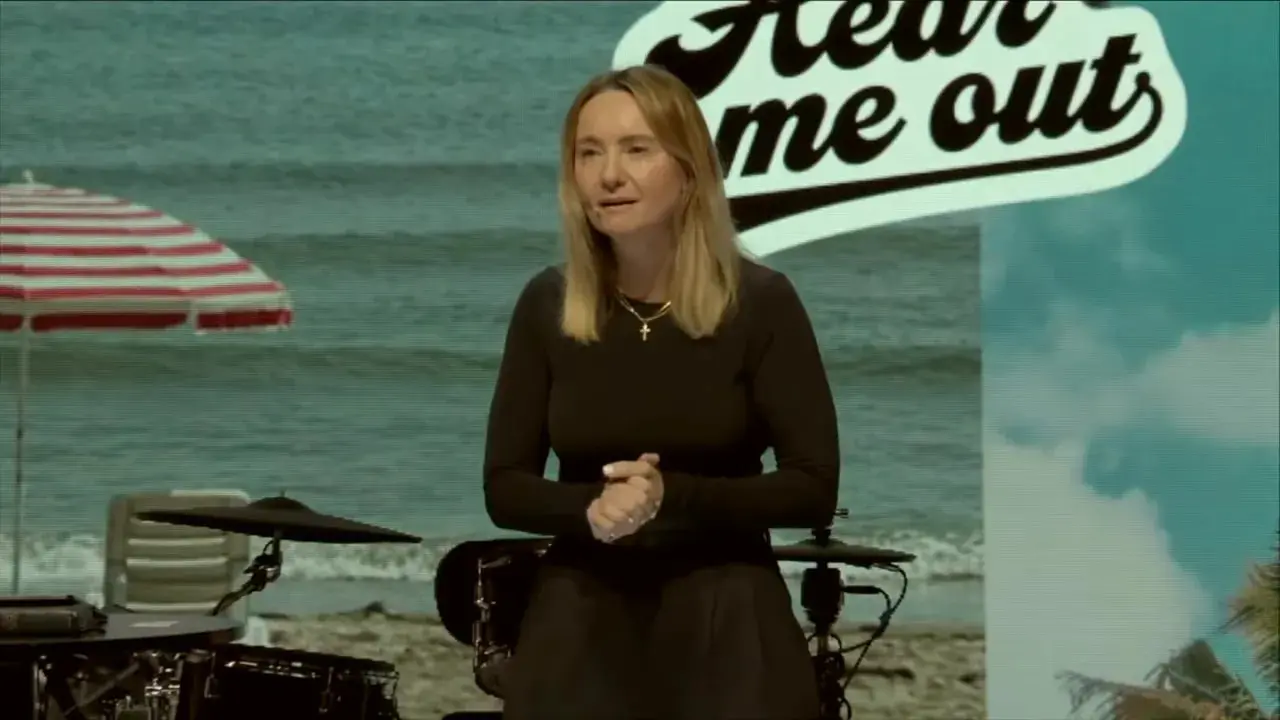
Hear Me Out | Week 5 | Pastor Melissa Pierce
Most of what we tell each other comes from what we consume online: reels, threads, influencers, and quick fixes. There is value in that. I learn things there, too. But those conversations rarely become the kind of story that changes a life. The stories that actually matter are the ones born where your decisions intersect God’s promises.
If you find yourself thinking, “I don’t have a story to tell,” this is for you. What I want to do is give a simple, practical blueprint, rooted in Ephesians 3:14-20, that helps you develop a lived faith so you can tell a story that points people to Jesus.
Why Stories Matter (and Where They Come From)
Stories that move people aren’t just entertaining; they’re transformational. They show how God met a real need, fixed a real brokenness, or carried someone through a valley. Those stories are not manufactured. They come from genuine encounter times when you turned to God first, when you trusted him, and when his promise intersected with your choice to rely on him.
We often substitute an authentic encounter with information. We search TikTok or Instagram before we pray. We ask influencers before we ask the Father. That pattern flips the order God intended. If you want a story that points others to Jesus, start by turning to God first.
The Simple Test: Who Do You Turn to First?
When life throws a curveball, what is your first reflex? Do you scroll, call a friend, or lean into God right away? Whatever comes first occupies the highest place in your life when it comes to wisdom and help. Christianity is built on the idea that you and God partner in your decisions, fulfilling his promises.
Partnering with God means choosing differently.
Belief is one thing. Partnership is another. Partnering with God means that in the moment of pain, you move toward him first. It is not spiritual performance; it is a posture. It is choosing to be dependent instead of coping. When you do that, you begin to collect the kinds of stories that give hope.
An Honest Story: When Coping Fails, and God Arrives
Let me tell you a personal example. For years, my husband and I tried to grow our family. We did everything, medical appointments, prayer, everything practical and spiritual we knew to do. One Sunday afternoon, after multiple services and much emotional effort, I sat alone in our condo and felt an overwhelming ache of loneliness and disappointment.
I did what many of us do: I tried to distract and fix the pain with productivity, texting friends, and planning outings. The coping strategies failed. Each unanswered text made the ache worse. Finally, I asked, “What are you doing?” I sat on the bed and had one of the most honest conversations I had ever had with God. I said, “God, I invite you into my pain. Help me. Nothing is working.”
The moment didn’t explode into joy or instant answers. I didn’t suddenly get pregnant. But something shifted, and I knew I wasn’t alone anymore. That day, God did not show up primarily as a provider; he showed up as a sustainer. He bore the ache with me. For the first time in that valley, I felt held.
Years later, God answered in surprising ways beyond what I could have asked or imagined. But the turning point began with the decision to invite him in when coping had failed.
Ephesians 3:14-20 as a Blueprint for Developing Faith
Paul’s prayer for the Ephesian church in Ephesians 3:14-20 is a blueprint. He is physically limited, imprisoned, but spiritually free. He models how to lead yourself in painful seasons. The passage offers actionable steps for developing a faith you can call your own.
“For this reason I bow my knees to the Father of our Lord Jesus Christ… that you, being rooted and grounded in love, may be able to comprehend with all the saints what is the width and length and depth and height, to know the love of Christ which surpasses knowledge; that you may be filled with all the fullness of God.” – Ephesians 3:14-19
A Five-Step Practical Guide to Get a Story Worth Telling
-
Bow your knee
Bowing the head is good. Bowing the knee is deeper. It signals submission: “God, I am utterly dependent on you.” It is an intentional decision to stop trying to fix everything yourself and to hand the problem over to the King.
When an anxious moment hits, instead of scrolling, kneel (even figuratively). Say, “Lord, I need you first.” That posture changes the outcome because it changes the source you rely on.
-
Receive his strength
Paul prays that God would strengthen believers “according to the riches of his glory.” Strength is a promise. When you bow your knee, God supplies inner strength through the Spirit. This strength is not merely physical energy; it is courage, hope, and endurance for the heart.
Action steps: ask specifically for the kind of strength you need. “Lord, give me patience. Help me not to panic. Grant me the grit to wait.” Be specific and expect incremental help; even if it is small, it is real.
-
Be rooted and grounded in love
Staying put in the right soil matters. Too often, we assume the answer is “over there”: a new job, a new city, a new relationship. Those moves can be good, but sometimes they are simply an escape. Rooting and grounding ourselves means we stay connected to God’s Word, his people, and his presence.
Think of a tree planted by streams of water. Some seasons yield fruit, some do not, but deep roots secure the tree through all seasons. Choose long-term spiritual practices: Bible reading, honest community, and consistent worship that keep your roots deep.
-
Meditate on his love
Paul wants us to know Christ’s love in its full dimensions. The enemy will downplay God’s affection, suggesting God is stingy or disappointed. The truth is, the Father delights to give good things to his children.
Practical meditation: memorize a verse about God’s love, repeat it when doubts come, and journal specific ways you experience his care. Let that truth shape your next decision to trust instead of perform.
-
Expect God to do exceedingly abundantly above.
Paul concludes: God can do “exceedingly abundantly above all we ask or think.” That does not mean every answer is instant. Sometimes it is gradual. But when you bow your knee, receive strength, stay rooted, and meditate on love, you position yourself for God’s creative work in and through you.
Make room for surprise. God may give you what you asked for, something better, or something unexpected. Keep your expectations large but patient.
What This Looks Like in Everyday Life
These steps are not only for a crisis. They are the scaffolding for ordinary days, parenting, career decisions, relational pain, and financial worry. When your first move is to bow the knee rather than reach for your phone, you begin to live differently.
Example: parenting. Instead of scanning influencers for a perfect recipe, ask the Father. He knows your children intimately. Bowing first opens the way for wisdom that fits the hearts in your home, not some generalized internet trend.
Example: disappointment. When a plan collapses, resist the urge to chase shiny alternatives. Stay rooted, pray, and ask for strength. Many testimonies begin with the decision to hold on, not run away.
Practical Habits to Build This Into Your Rhythms
- Daily knee moments: Begin your day by intentionally bowing, real or symbolic, and asking God for the posture of dependence.
- Scripture anchors: Pick 2–3 verses about God’s love and strength. Recite them when you face stress.
- Community accountability: Share your valleys with someone who will pray with you, not just fix you.
- Waiting practices: Practice small acts of waiting (a silent minute, an extra prayer before responding) to strengthen your capacity to wait on God.
- Record the outcomes: Keep a “God story” journal. When God answers, write it down. Over time, you’ll accumulate stories to share.
Why Timing Matters
One of the biggest traps is expecting instantaneous fixes. God sometimes answers quickly; other times, he works over years. Waiting does not mean God is absent. Isaiah reminds us that those who wait on the Lord will renew their strength. Patience is not passive; it is active trust.
When You Don’t Know Where to Begin
Start small. Kneel once today, literally or figuratively, and say, “Help me. I can’t fix this.” Ask for one kind of strength: courage, patience, or clarity. Tell one person what you are asking God for so you have someone to pray with you.
Stories Are Produced by Decisions Meeting Promises
The central idea is this: Christianity is where your decisions intersect God’s promises. You decide to go to him first. He promises to be with you, to strengthen you, and to love you beyond measure. When those two things meet, you produce a story that other people can hear and find hope in.
An Invitation
If you have never chosen to make Jesus your Lord, the invitation is simple. He loved you before you loved him. He took your sin and shame so you don’t have to carry them. If today is the day you want to make that decision, place your hand on your heart and mean it: “Jesus, be Lord of my life.”
If you have already taken that step, consider who needs to hear your story. Our faith grows when we both receive and give testimony. Share one small truth this week: where you were, what you asked God for, and what he did, even if the story is still unfolding.
Final Encouragement
You will face valleys. The question is: what do you do first? Bow your knee. Receive the Spirit’s strength. Stay rooted in love. Meditate on it until the enemy’s lies lose power. Expect God to do more than you can imagine.
I told you my story so you would know it is possible: the ache, the honest prayer, the patient waiting, and then the unexpected increase of blessing. God wants to do that for you, too. It begins with one choice, bowing your knee.
Key passages to meditate on this week
- Ephesians 3:14–20
- Psalm 23
- John 15 (abide in me)
- Matthew 7:7–11 (ask, seek, knock)
- Isaiah 40:31 (wait on the Lord)
Keep a small journal of prayers and answers, and in the months ahead, you’ll find that your life begins to collect the kind of stories that point others to Jesus. Bow your knee first and watch what happens.